Our English-language content
You can, of course, read our whole website in English using an online tool such as GoogleTranslate — but some of our content is also available in a verified English translation:
About us
Who we are, what we do, and how we are organized you can read here.
Our blockbuster poster on disinformation techniques
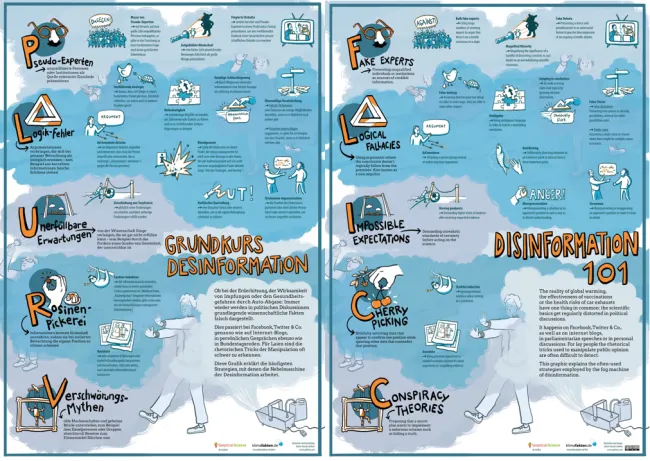
Be it climate change, COViD or other topics: disinformation campaigns often use the same methods. We explain the five most common ploys (it's #PLURV in German and #FLICC in English) in this info poster – it can be downloaded here (and a printed version is available too).
Over the years we have translated the poster into several other languages (Spanish, Polish and more) – find here all versions.
Our poster and quiz on the "Discourses of Delay"
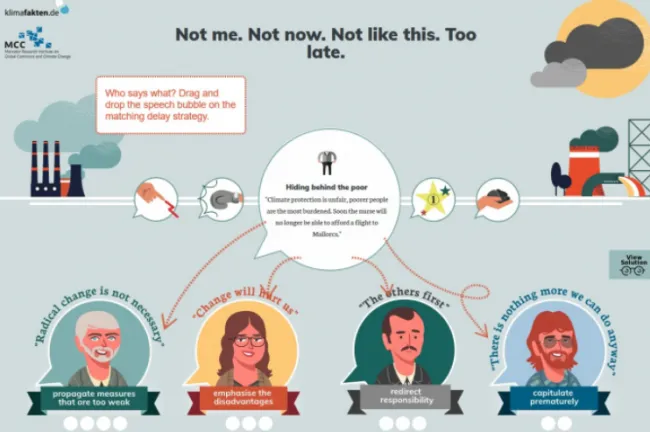
In 2019, the Berlin-based research institute MCC analysed climate discourses in politics, business and society – and identified twelve popular argumentation patterns that are repeatedly used to delay or block stronger climate action. Together with the MCC, we have transformed the results of the study into a large infographic – and an interactive game for computers and smartphones.
More infographic posters
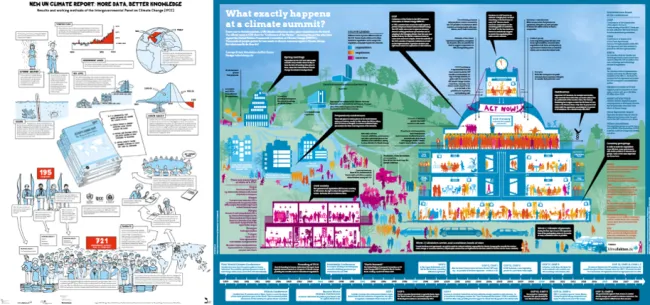
How the IPCC works and what it's Sixth Assessment Report says (2021)
... and what exactly happens at the annual UN climate summits (2017)
Recommendations for Covering Climate from a Psychological Perspective

Media coverage on climate sometimes provokes negative reactions, and journalists often find it difficult to deal with this. Together with 'Psychologists for Future', we have published a guide that aims to remedy this situation. One of the key recommendations: never conceal facts because they might cause fear – instead, provide information that enables people to deal with their fears in a constructive way.
Reporting extreme weather and climate change. A guide for journalists
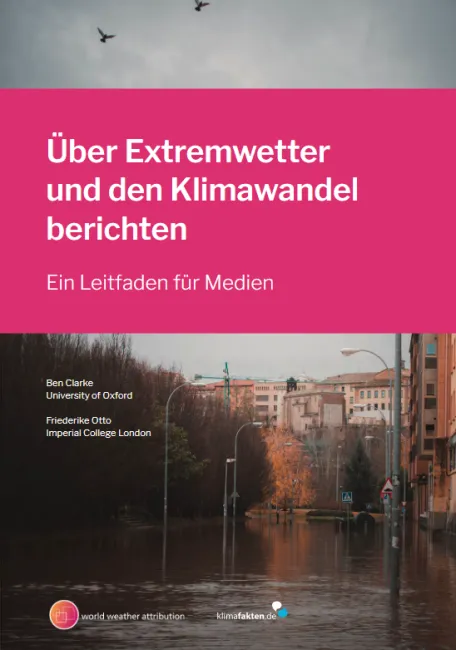
The probability and intensity of several types of extreme weather events are increasing worldwide, and science is becoming increasingly able to identify the influence of global warming. However, reporting on this topic is difficult, and the media sometimes misrepresent the state of research. In collaboration with the World Weather Attribution initiative Klimafakten published a guide which explains the scientific findings and provides practical tips for journalists. It's English version can be found here.
Graz Charter for Climate Communication
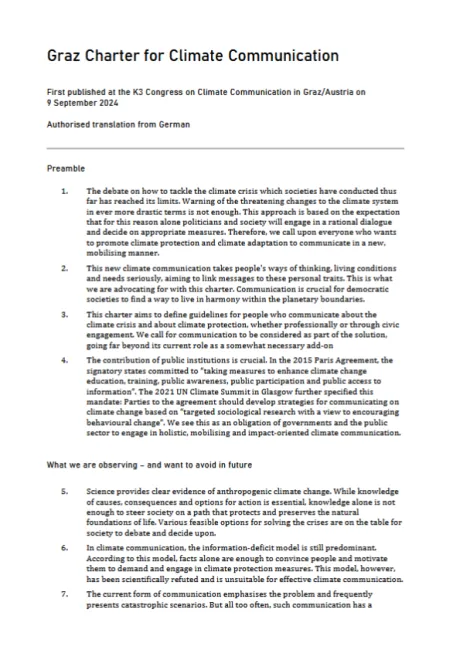
Dramatic last-minute rhetoric has led the climate debate into a dead end. At the 2024 K3 Congress in Graz, a policy paper was presented on how to improve the situation. Among the first signatories are journalist and doctor Eckart von Hirschhausen, TV weather presenter Karsten Schwanke, actor Maria Furtwängler and scientist Hans-Joachim Schellnhuber. Read the Carta's English translation here.
Fredi Otto & Kim Stanley Robinson:
Climate science meets climate science fiction
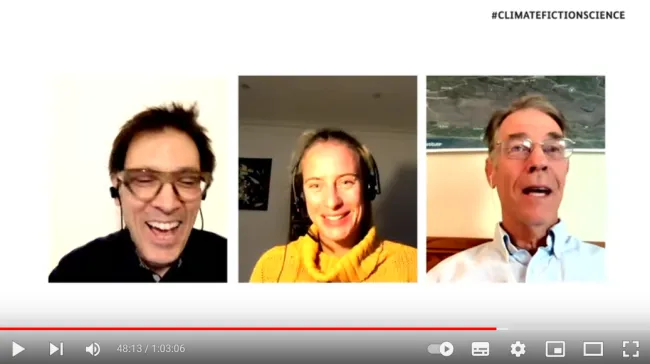
Has research failed to explain climate change in understandable and compelling terms? Can literature do better? At the invitation of klimafakten.de and Deutsche Welle, climate researcher Fredi Otto and science fiction author Kim Stanley Robinson discussed this topic. A recording of the event is available on YouTube.
Video „Europe's climate in 2050“
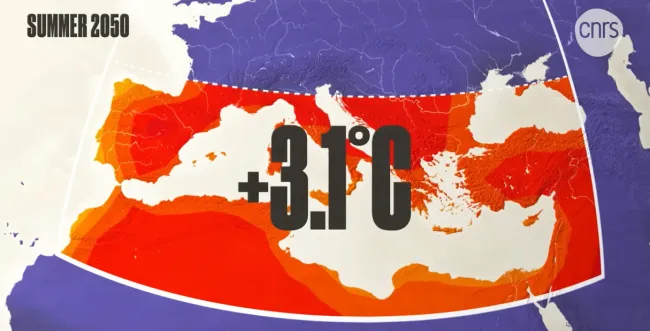
More data, better climate models, faster supercomputers: climate research can estimate the consequences of climate change with increasing accuracy – and with increasing clarity for individual countries or regions. Meteo France, MeteoSwiss and the Hamburg-based Helmholtz Institute Gerics have summarised the most important findings for Europe in a vivid video animation. We've published the German version of this film, the English one can be found here.